Rome isn't just a city you visit – it's a living museum where every cobblestone tells a story, and every corner reveals another layer of history. Whether you're drawn by the promise of world-class art, incredible food, or the chance to walk where gladiators once fought, the Eternal City delivers experiences that will stay with you long after you've returned home. Here are the essential experiences that capture the true spirit of Rome.
The Colosseum and Roman Forum
The Colosseum is Rome's calling card, and for good reason. Standing before this massive amphitheater, you can almost hear the roar of 50,000 spectators cheering for gladiators. The underground levels, opened to the public in recent years, reveal the complex machinery that made the spectacles possible – elevators for wild animals, trapdoors for dramatic entrances, and holding cells where fighters awaited their fate.
Practical Tips: Book a combined ticket with the Roman Forum and Palatine Hill (€18-25). Visit early morning (8:30 AM) or late afternoon to avoid crowds. Allow 3-4 hours for all three sites. Skip-the-line tours cost €35-60 but are worth it during peak season.
Best for: History enthusiasts, first-time visitors, and families with older children who can appreciate the historical significance.
Vatican Museums and Sistine Chapel
The Vatican Museums house one of the world's greatest art collections, accumulated by the Catholic Church over centuries. The journey through these halls culminates in the Sistine Chapel, where Michelangelo's frescoed ceiling and "The Last Judgment" create an almost overwhelming sensory experience. The sheer scale and detail of these masterpieces are impossible to capture in photos.
Practical Tips: Book tickets online in advance (€17-25). Early morning or late afternoon slots are less crowded. Audio guides are essential (€7). Allow 3-4 hours minimum. Consider a small group tour to skip lines and gain deeper insights.
Best for: Art lovers, culture seekers, and anyone interested in religious history.
Trastevere Food Tour
Trastevere's narrow medieval streets hide some of Rome's best eating secrets. A food tour here isn't just about tasting – it's about understanding how Romans really eat. You'll discover family-run trattorias that have been serving the same recipes for generations, learn the difference between carbonara and cacio e pepe, and understand why Romans never eat cappuccino after 11 AM.
Practical Tips: Evening tours (6-9 PM) are best when restaurants open. Cost ranges from €45-85 per person. Come hungry but not starving – you'll be walking between 6-8 stops. Book with local guides who know the neighborhood intimately.
Best for: Food enthusiasts, couples, and anyone wanting to experience authentic Roman culture.
The Pantheon at Sunrise
The Pantheon is architectural perfection frozen in time. Built nearly 2,000 years ago, its dome remains the world's largest unreinforced concrete dome. But here's the secret: visit at sunrise when the morning light streams through the oculus (the circular opening at the top), creating an almost spiritual atmosphere with virtually no crowds.
Practical Tips: Free entry, open daily 9 AM-7 PM. Arrive by 8:45 AM for the sunrise effect. Spend 30-45 minutes inside. Combine with breakfast at nearby Sant'Eustachio Il Caffè for perfect espresso.
Best for: Architecture lovers, photographers, early risers, and solo travelers seeking contemplative moments.
Villa Borghese Gardens and Galleria Borghese
Villa Borghese offers a green escape from Rome's intensity. The park itself is perfect for picnics and leisurely strolls, while the Galleria Borghese houses masterpieces by Bernini, Caravaggio, and Titian. Bernini's sculptures, particularly "Apollo and Daphne," showcase marble carved with such skill it seems to breathe.
Practical Tips: Gallery entry requires advance booking (€15 plus €2 booking fee). Visits are limited to 2 hours. Park entry is free. Rent bikes (€5/hour) to explore the gardens. Allow half a day for both.
Best for: Art enthusiasts, families with children, couples seeking romantic walks, and anyone needing a break from urban intensity.
Cooking Class in a Roman Home
Learning to cook Roman classics in someone's actual home provides insights no restaurant can offer. You'll understand why Romans are so particular about their pasta water, learn the precise technique for carbonara that prevents scrambled eggs, and discover family secrets passed down through generations.
Practical Tips: Classes cost €85-150 per person and typically last 3-4 hours. Many include market visits to select ingredients. Book through platforms like Cesarine or local cooking schools. Classes usually end with sharing the meal you've prepared.
Best for: Food lovers, couples, small groups of friends, and travelers wanting authentic cultural immersion.
Baths of Caracalla
These ancient Roman baths reveal how sophisticated Roman engineering was. The complex once accommodated 1,600 bathers simultaneously, with cold pools, hot rooms, libraries, and gymnasiums. The scale is breathtaking, and the preserved mosaics show incredible artistry.
Practical Tips: Entry costs €8 (€10 with special exhibitions). Audio guide highly recommended (€6). Visit takes 1.5-2 hours. Less crowded than other major sites. Open daily 9 AM-sunset.
Best for: History buffs, families with teenagers, and visitors wanting to see impressive Roman engineering without massive crowds.
Aperitivo in Campo de' Fiori
Roman aperitivo culture is about more than drinking – it's a social ritual that bridges the gap between work and dinner. Campo de' Fiori comes alive during aperitivo hour (6-8 PM) when locals gather for Negronis, Aperol Spritzes, and small plates while the square buzzes with conversation.
Practical Tips: Drinks cost €8-12 and often include small snacks. Arrive by 6:30 PM for the best atmosphere. Try Salotto 42 for cocktails or Fluid for a younger crowd. Standing room is part of the experience.
Best for: Social travelers, couples, groups of friends, and anyone wanting to experience authentic Roman evening culture.
Capitoline Museums and Piazza del Campidoglio
Designed by Michelangelo, the Piazza del Campidoglio offers some of Rome's most stunning views, particularly at sunset when the city glows golden. The Capitoline Museums house the original Marcus Aurelius statue and incredible ancient Roman sculptures, including the famous "Dying Gaul."
Practical Tips: Museum entry €15 (€13 reduced). Open daily 9:30 AM-7:30 PM. Spend 2-3 hours inside, 30 minutes enjoying the piazza views. Combine with nearby Roman Forum visit.
Best for: Art and history lovers, photographers, and visitors seeking spectacular city views.
Day Trip to Ostia Antica
Rome's ancient port city offers remarkably preserved ruins without the crowds of Pompeii. You can walk through an ancient amphitheater, explore detailed mosaics in the Baths of Neptune, and wander through what was once a thriving commercial center.
Practical Tips: Take the Roma-Lido train from Piramide station (€1.50 each way). Site entry €10. Bring water and snacks – limited facilities on-site. Allow 4-6 hours for the full experience including travel time.
Best for: History enthusiasts, families with older children, and travelers wanting to escape Rome's intensity while staying close.
Underground Rome: San Clemente Basilica
This 12th-century church sits atop a 4th-century church, which in turn was built over a 1st-century Mithraic temple. Descending through these layers feels like traveling through time, with each level revealing different periods of Roman and Christian history.
Practical Tips: Entry €10, includes audio guide. Open Monday-Saturday 9 AM-12:30 PM and 3-6 PM, Sunday from noon. Visit takes 1-1.5 hours. Can be claustrophobic for some visitors.
Best for: History buffs, archaeology enthusiasts, and travelers interested in early Christianity and Roman religious practices.
Gianicolo Hill at Sunset
This hill offers Rome's most spectacular panoramic views, especially magical during sunset when the entire city glows. It's where Romans come to propose, where artists sketch, and where visitors finally understand why Rome is called the Eternal City.
Practical Tips: Free access always. Best views 30 minutes before sunset. Take bus 870 or walk from Trastevere (20 minutes uphill). Bring a light jacket for evening visits. Allow 1-2 hours.
Best for: Photographers, couples, families with children (playground nearby), and anyone seeking Instagram-worthy views.
Mercato di Testaccio
This covered market showcases authentic Roman food culture. Local vendors sell everything from perfectly ripe tomatoes to house-made pasta. The surrounding Testaccio neighborhood, built on ancient pottery shards, offers excellent restaurants and a more local atmosphere than central Rome.
Practical Tips: Open Monday-Saturday, mornings are best (8 AM-2 PM). Try Checchino dal 1887 for traditional Roman offal dishes or Flavio al Velavevodetto for modern interpretations. Combine with visiting the Protestant Cemetery nearby.
Best for: Food enthusiasts, travelers seeking authentic local experiences, and visitors interested in Roman neighborhoods beyond the center.
Castel Sant'Angelo
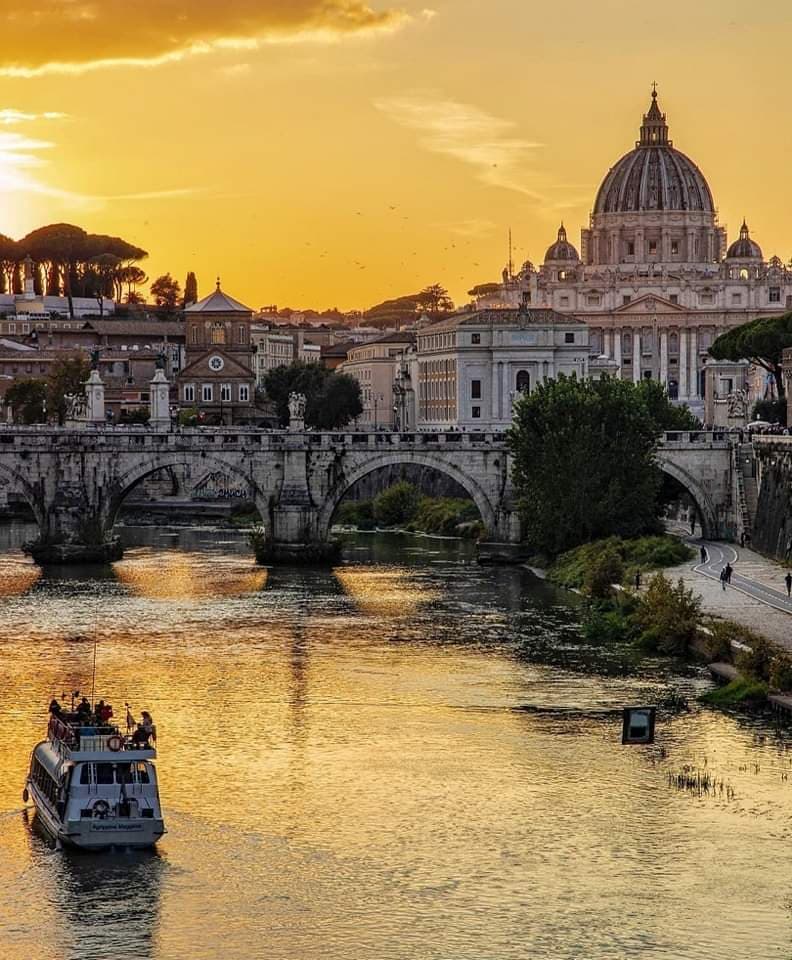
Originally Hadrian's mausoleum, this fortress became a papal residence and prison. The spiral ramp leading to the top follows the ancient Roman design, while the papal apartments showcase Renaissance luxury. The rooftop terrace provides stunning views of the Vatican and Rome.
Practical Tips: Entry €14 (€7 reduced). Audio guide recommended (€5). Visit takes 2-3 hours. Less crowded in late afternoon. Combine with a walk across the adjacent Ponte Sant'Angelo.
Best for: History lovers, architecture enthusiasts, and visitors wanting excellent views with fewer crowds than other viewpoints.
Evening Stroll Through Historic Center
Rome transforms after dark when floodlights illuminate monuments and the crowds thin out. A walking route from the Pantheon through Piazza Navona to the Trevi Fountain reveals the city's magic when its ancient stones glow against the night sky.
Practical Tips: Start around 8 PM when lights are on but restaurants are still open. Wear comfortable walking shoes on cobblestones. Stop for gelato at Giolitti or a late dinner in one of the many trattorias you'll pass.
Best for: Couples, solo travelers, photographers, and anyone wanting to experience Rome's romantic evening atmosphere.
Rome rewards those who look beyond the obvious tourist trail. Yes, visit the Colosseum and Vatican – they're magnificent and deservedly famous. But also wander Trastevere's streets, join Romans for aperitivo, and take time to simply sit in a piazza watching daily life unfold. The city's real magic lies in these quieter moments when you realize you're not just visiting Rome – you're becoming part of its continuing story. Book your Roman adventure through TixLayer and prepare for experiences that will reshape how you see history, art, and the simple pleasure of living well.